
Ramsey Dukes
Magic, Philosophy, and the Occult Imagination

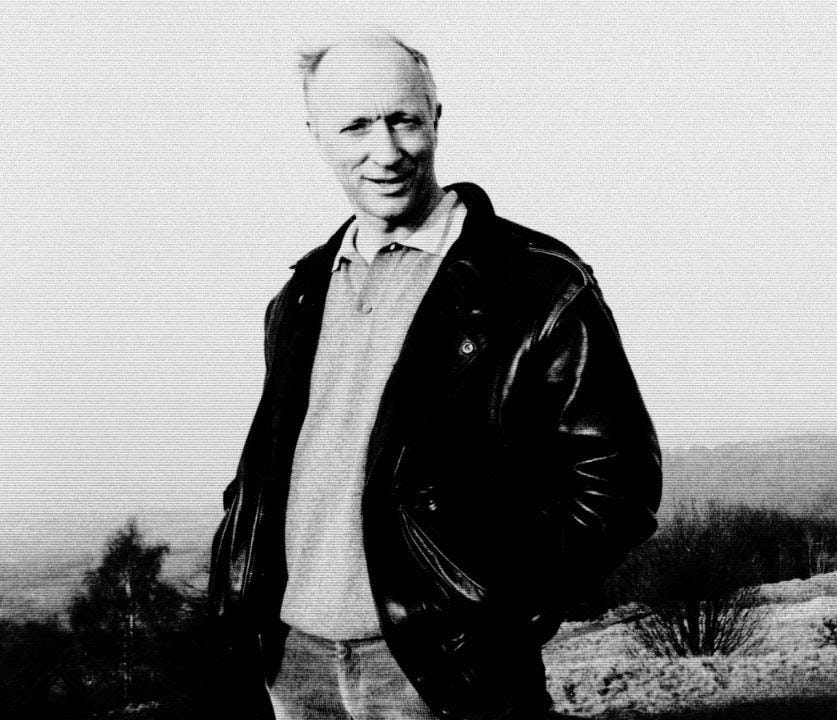
Ramsey Dukes, the best-known pen name of Lionel Snell, occupies a distinctive place in modern occult literature. Snell is an English writer, magician, publisher, and author on magic and philosophy who has written under several names, with Ramsey Dukes as the best known (“About us”; “Lionel Snell”). He can’t be considered simply an author of books about magic, nor simply a practitioner writing from within esoteric subcultures. He’s a philosopher of magical thinking: a writer who has spent decades asking what magic means when set beside science, religion, art, psychology, politics, information theory, and everyday experience. His work helped shape the intellectual atmosphere from which chaos magic emerged in the 1970s, yet it’s never been reducible to that movement alone (“Lionel Snell”). Dukes’s writing is witty, skeptical, speculative, and deliberately destabilizing. It invites readers to treat occultism not as a closed system of dogma, but as a way of thinking about reality, language, imagination, and human freedom.
Lionel Snell was born in England in the closing period of the Second World War and grew up in an unconventional cultural environment associated with the Kibbo Kift movement; his own biographical site says he lived as a child in a converted water mill in the Gloucestershire Cotswolds (“About us”). His early life gave him a rural and imaginative background, while scholarships later carried him into formal academic settings. At school in Bristol, he encountered a library of ancient alchemy and magic books associated with E. J. Holmyard, and a scholarship to Cambridge University enabled him to study occult material while graduating in pure mathematics (“About us”; “Lionel Snell”).
This mixture of mathematical discipline, literary play, and occult curiosity became central to Snell’s later writing. Unlike many esoteric authors who present magic as a set of inherited truths, Dukes repeatedly frames it as a problem of models: how different cultures explain experience, why some kinds of knowing are authorized while others are dismissed, and how imagination can be used practically without surrendering critical intelligence. His famous fourfold comparison of science, religion, art, and magic extends C. P. Snow’s “two cultures” argument into a broader account of competing worldviews. Magic, in this framework, isn’t simply a supernatural claim; it’s a mode of engagement with significance, intention, symbol, and transformation.
Snell’s use of pseudonyms is more than a publishing quirk. Sources list Ramsey Dukes as his best-known pen name and also associate him with Lemuel Johnstone, while Thundersqueak appears under the additional personae of Liz Angerford and Ambrose Lea or Lee (“Ramsey Dukes Biography”; “Lionel Snell”). These masks allowed him to dramatize the divided, dialogic nature of occult thinking. His books often read as arguments between positions rather than as manuals handed down from a single authority. The pseudonymous method suits his subject: magic, for Dukes, is inseparable from performance, role, belief, doubt, and the creative manipulation of identity. His authorial masks also protect a comic and satirical strain that runs through much of his work. Serious metaphysical questions are often approached through jokes, parodies, outrageous titles, and sudden reversals of tone.
Dukes’s most influential early book is SSOTBME: An Essay on Magic, Its Foundations, Development and Place in Modern Life, first published by The Mouse That Spins in 1974 and later revised (“Lionel Snell”; “Ramsey Dukes Biography”). Its deliberately provocative title, often expanded as Sex Secrets of the Black Magicians Exposed, disguises a compact and original work of occult philosophy. Rather than offering lurid secrets, the book proposes a serious account of magic’s place in human culture. It examines how magic differs from science, religion, and art, and why modern rationalism has difficulty understanding magical practice on its own terms.
The book’s importance lies partly in its timing. Appearing during the ferment of the 1970s British occult revival, it provided a language for readers dissatisfied with both traditional ceremonial occultism and uncritical New Age optimism. Dukes didn’t reject tradition, but he treated magical systems as usable maps rather than sacred territories. In doing so, he anticipated and influenced the pragmatism associated with chaos magic: the idea that belief can be adopted, tested, discarded, or transformed according to practical results. Online bibliographic summaries and author profiles repeatedly identify SSOTBME as a seminal or influential text in the nascent chaos current (“Ramsey Dukes Biography”; “Ramsey Dukes: books, biography”).
Another major contribution was Dukes’s early attention to Austin Osman Spare. Author profiles report that Gerald Yorke introduced Snell to Spare’s writings and that Snell’s article “Spare Parts,” published in Agape in 1973, helped introduce Spare’s system of magic to a new readership (“Ramsey Dukes: books, biography”). Spare’s emphasis on sigils, subconscious desire, and personal magical technique appealed to writers who wanted to move beyond the hierarchies and inherited symbolism of ceremonial orders. Dukes’s treatment of Spare didn’t merely popularize a neglected figure; it also modeled a way of reading occult history as a resource for experiment rather than obedience.
Although Dukes is often described as a pioneer or precursor of chaos magic, his relationship to the movement is best understood as intellectual rather than doctrinal. He supplied philosophical tools, humor, and skepticism. His writing encouraged occultists to ask not only whether a technique “works,” but what it means to call something magical, how language structures experience, and how belief itself functions as a technology of consciousness.
Thundersqueak: The Confessions of a Right Wing Anarchist, written with or through the personae of Liz Angerford and Ambrose Lea, is one of Dukes’s strangest and most energetic works. Bibliographic lists identify Thundersqueak as a Mouse That Spins publication and connect it with Liz Angerford and Ambrose Lee/Lea (“Ramsey Dukes Biography”; “Lionel Snell”). Composed in the aftermath of his reported performance of the Abramelin operation in 1977, it reads as rant, confession, manifesto, dialogue, and spiritual provocation (“Lionel Snell”). The subtitle is intentionally paradoxical, bringing together political and occult tensions rather than resolving them into a program.
The book’s occult significance lies in its insistence that transformation is NOT polite. It treats magical work as psychic surgery: the tearing down of inherited assumptions, self-deceptions, and social conditioning. Where SSOTBME analyzes magic as a cultural form, Thundersqueak dramatizes magic as crisis and liberation. Its influence on later occult counterculture comes from that tone of dangerous freedom, the sense that magic is less a hobby than an assault on stale identity.
In Words Made Flesh: Information in Formation, Dukes turns more explicitly toward philosophy, information, and the nature of reality. Publisher and bookseller descriptions present the book as asking whether matter, energy, or information is most fundamental and as exploring the possibility of a virtual or information-based reality (“Words Made Flesh: Information In Formation”; “Words Made Flesh, Or, Information in Formation”). The book is frequently noted for anticipating later popular discussions of virtual reality and simulation (“Ramsey Dukes: books, biography”). If reality is understood as information-based, then phenomena that materialism dismisses—synchronicity, divination, symbolic correspondences, and action at a distance—can be reconsidered within a different conceptual frame.
Dukes’s argument isn’t a simple claim that the universe is a computer simulation. It’s more subtle and more useful: he asks what sorts of expectations follow from different models of reality. A purely material universe prizes independence, randomness, and separation. An information-rich or virtual universe, by contrast, might make connectedness and symbolic linkage less surprising. In this way, Words Made Flesh extends occult thought into debates about media, computation, metaphysics, and the limits of scientific explanation.
Dukes’s later books continue to combine practical occultism, philosophical provocation, and comic deflation. Bibliographic summaries list BLAST Your Way to Megabuck$ with My SECRET Sex-Power Formula, The Good, the Bad, the Funny, and What I Did in My Holidays: Essays on Black Magic, Satanism, Devil Worship and Other Niceties among his works (“Ramsey Dukes Biography”). BLAST parodies occult sensationalism and self-help marketing while reflecting on spiritual ambition, desire, and manipulation. The Good, the Bad, the Funny, written with Adamai Philotunus, develops his interest in paradox, moral categories, and the absurdity that often attends metaphysical systems. What I Did in My Holidays collects essays on black magic, Satanism, devil worship, and related topics, typically treating frightening labels as opportunities for analysis rather than as invitations to melodrama.
Uncle Ramsey’s Little Book of Demons is among his most accessible practical works; bibliographic entries give its subtitle as The Positive Advantages of the Personification of Life’s Problems (“Ramsey Dukes Biography”; “The Little Book of Demons”). That subtitle captures a central Dukesian strategy: personify difficulties, speak with them, and use imagination to transform one’s relationship to them. Rather than presenting demons as objective monsters or dismissing them as mere fantasy, the book treats personification as a psychological and magical tool. How to See Fairies similarly uses a playful premise to explore perception, attention, and psychic possibility. The Abramelin Diaries and related writings return to the discipline, ordeal, and interpretation of the Abramelin operation, linking personal magical practice with broader questions about spiritual authority and self-transformation (“The Abramelin Diaries”).
His autobiographical and reflective works, including My Years of Magical Thinking, show the long arc of a writer who has remained interested in magic not as a youthful rebellion but as a lifetime method for interrogating reality. In later years, Dukes has also maintained an online presence, including a YouTube channel and his own website, where he describes his interest in the interface between magic and other cultures such as religion, reason, art, divination, therapy, and everyday experience (“Ramsey Dukes / Lionel Snell”; “About us”).
Dukes’s style is central to his significance. He’s funny without being merely comic, skeptical without being dismissive, and occult without being credulous. He resists both the solemnity of occult authority and the reductionism of rationalist debunking. This refusal makes his work valuable to readers who want to think magically without abandoning intellectual standards. His books often suggest that the conflict between magic and reason is itself poorly framed. The real question isn’t whether one must choose between them, but how different modes of knowing can be used responsibly, creatively, and with awareness of their limits.
His legacy is especially visible in chaos magic’s suspicion of fixed belief, its fondness for experimental technique, and its willingness to borrow models from psychology, art, cybernetics, and popular culture. Reference and author-profile sources describe Snell as an important early contributor to 1970s occult discussion and as one of the founding names associated with chaos magic (“Lionel Snell”; “Ramsey Dukes: books, biography”). Yet Dukes’s work also exceeds chaos magic. It belongs to a wider tradition of British esoteric satire and philosophical dissent, standing somewhere between Aleister Crowley’s magical modernism, Austin Osman Spare’s individualist occultism, Robert Anton Wilson’s model agnosticism, and the comic metaphysics of late twentieth-century counterculture.
Ramsey Dukes is important because he made occult writing more intelligent, more self-aware, and more playful. As Lionel Snell, he brought mathematical training, literary agility, and practical occult experience to a body of work that continually questions its own assumptions. His books don’t ask readers simply to believe in magic. They ask readers to examine belief itself: how it shapes perception, how it becomes a tool, how it can imprison or liberate, and how it might be used without being worshiped. In that sense, Dukes’s occult writings remain alive because they’re not merely about hidden worlds. They’re about the strange, creative, and often comic ways human beings make worlds through language, imagination, and action.
Selected Books Discussed
· SSOTBME: An Essay on Magic, Its Foundations, Development and Place in Modern Life
· Thundersqueak: The Confessions of a Right Wing Anarchist
· Words Made Flesh: Information in Formation
· BLAST Your Way to Megabuck$ with My SECRET Sex-Power Formula
· The Good, the Bad, the Funny
· What I Did in My Holidays: Essays on Black Magic, Satanism, Devil Worship and Other Niceties
· Uncle Ramsey’s Little Book of Demons: The Positive Advantages of the Personification of Life’s Problems
· How to See Fairies: Discover Your Psychic Powers in Six Weeks
· The Abramelin Diaries
· My Years of Magical Thinking
Belief adopted, tested, discarded, or kept according to whether it actually does the job is a genuinely different relationship to a framework than either believing it as literal fact or performing it as empty aesthetic. It's closer to how a competent tradesperson relates to tools, useful, replaceable, never confused with the actual work getting done.
I've enjoyed watching his videos on YouTube. He's still quite prolific