
Kenneth Grant, the Typhonian Current, and the Reimagining of Modern Occultism
From Thelema to the Nightside: Kenneth Grant’s Magical Legacy

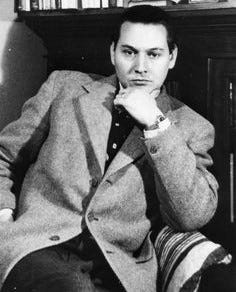
I’ll be honest. I’m not a huge fan of Kenneth Grant’s actual writing. I can’t readily explain why. I just don’t enjoy his books. However, his works serve as a bridge between historical occult practices and contemporary interpretations, making them essential for understanding the evolution of modern occultism. He occupies a distinctive and controversial position in twentieth-century Western esotericism. A ceremonial magician, novelist, poet, and theorist of Thelema, he’s best known as the author of the nine-volume Typhonian Trilogies, a body of work that joined Aleister Crowley’s Thelemic system to Tantra, Qabalah, dream practice, the art and magical theory of Austin Osman Spare, and even the weird fiction of H. P. Lovecraft. Biographical accounts consistently describe Grant as Crowley’s late-life secretary and student, Spare’s friend and advocate, and the founder with Steffi Grant of the Typhonian Ordo Templi Orientis, later called the Typhonian Order. His work proved influential not because it simplified occultism, but because it expanded its possible imaginative and symbolic range. As one overview puts it, Grant’s writings influenced “chaos magic, the Temple of Set, and the Dragon Rouge,” while attracting academic interest in Western esotericism. [Source: Wikipedia; Occult World; Occult Library]
Grant’s relationship with Aleister Crowley was brief but formative. After discovering Crowley’s Magick in Theory and Practice as a young man, Grant sought contact with the aging magician and eventually became his personal secretary in the mid-1940s. Accounts of Grant’s life state that Crowley instructed him in esoteric practice and initiated him into the Ordo Templi Orientis. Crowley died in 1947, and Grant was subsequently regarded by some as Crowley’s heir apparent in Britain, though later disputes over O.T.O. succession would divide Grant from Karl Germer and from other Thelemic claimants. [Source: Wikipedia; Magick Books Library]
Grant’s importance as a Crowleyan interpreter lay in his refusal to treat Thelema as a closed system. Crowley’s famous formulation, “Do what thou wilt shall be the whole of the Law,” became for Grant not merely an ethical axiom but the entrance to a wider magical universe. In works such as The Magical Revival, Aleister Crowley and the Hidden God, and Cults of the Shadow, Grant emphasized the hidden, lunar, sexual, and “nightside” dimensions of Crowley’s magical cosmology. His Crowley wasn’t only the prophet of the New Aeon but also the transmitter of a current that could be connected to Tantra, ancient Egyptian symbolism, stellar mythology, and non-human intelligences.
“In all forms of magick, the imagination or image-making faculty is the most important factor.” —Kenneth Grant, The Magical Revival [Source: QuotesGram]
This statement clarifies why Grant treated Crowley’s system as a living symbolic engine rather than a fixed body of doctrine: for Grant, magical efficacy depended on the active cultivation of images, correspondences, and visionary states.
Grant’s relationship with Austin Osman Spare was equally important, and perhaps more decisive for his later influence on modern magic. Spare was an artist and occultist whose ideas about sigils, obsession, automatic drawing, and the unconscious anticipated later magical psychology. In 1948, Steffi Grant wrote to Spare, and the Grants began an eight-year friendship with him. Grant helped preserve and publicize Spare’s work, eventually publishing studies such as Images and Oracles of Austin Osman Spare and helping to transmit Spare’s theories to later occultists. [Source: Occult World; Wikipedia]
Spare’s magical vocabulary centered on the concepts of Zos and Kia: the embodied self and the deeper, unconditioned source of desire and magical power. One quotation often attributed to Spare captures his radical individualism: “For I am I: ergo, the truth of myself; my own sphinx, conflict, chaos, vortex—asymmetric to all rhythms, oblique to all paths.” Grant saw in Spare not merely an eccentric artist but a magical innovator whose system could be aligned with Thelema while retaining its anti-institutional, deeply personal character. In 1954, Grant and Spare co-founded the Zos Kia Cultus, described by later accounts not as a conventional cult but as a designation for “the creative nexus of personal magical experience.” [Source: Occult World; AZ Quotes]
“Spare’s drawings were always inspired by the New Aesthetic, the New Sexuality. They amount almost to masturbation in line; the line coils and curls upon itself and mounts the steep incline of ecstasy as the amazing sigils are woven into a complex web of dream.” —Kenneth Grant, The Magical Revival [Source: Goodreads]
Grant’s language here shows both his fascination with Spare’s art and the way he interpreted artistic line, sigil, sexuality, and dream as parts of one magical process.
Grant’s major contribution as a writer was the construction of the Typhonian current: a deliberately transgressive, liminal, and imaginative expansion of Thelemic occultism. Across the nine volumes of the Typhonian Trilogies, published between the 1970s and early 2000s, he developed an esoteric system that treated myth, dream, sexuality, Qabalah, and fiction as interlocking gateways. The contents and descriptions of Nightside of Eden show his characteristic method: the Tree of Life is paired with its “nightside,” the Tunnels of Set, and the Western magical tradition is interpreted through dark, liminal, and non-rational symbolism. A publisher’s description of Nightside of Eden states that the familiar Tree of Life has “another side, a nightside,” and that Grant sought to explicate the “Tree of Death” and the “Mysteries of the Left-Hand Path.” [Source: The Occult Library; Internet Archive]
“This Tree, which is a familiar concept to mystics and magicians alike, has another side, a nightside.” —Kenneth Grant, Nightside of Eden promotional description quoted by Starfire Publishing
“THE OPINION seems to be held in certain quarters that I have in my previous books revealed a little too much of the Mysteries, and that the Veil of Isis has been lifted to an almost unseemly height.” —Kenneth Grant, Nightside of Eden [Source: Internet Archive]
These remarks reveal Grant’s self-understanding as an initiatory writer: he presented his books not merely as commentary, but as disclosures of esoteric material that some occultists considered guarded or dangerous.
Grant’s prose is dense, associative, and often deliberately unstable. Rather than arguing in a purely academic manner, he writes as a magician-poet, assembling correspondences among deities, stars, sexual formulae, dreams, monsters, and literary fictions. This method has drawn criticism for speculation and overextension, but it also gave later occultists permission to treat fiction, art, and personal gnosis as magical sources. In this sense, Grant’s writing is less a system of doctrine than a technology of symbolic intensification: it teaches readers to read myth and imagination as portals.
Grant made at least four major contributions to modern occultism. First, he preserved and extended Crowley’s Thelemic legacy while refusing to reduce it to institutional orthodoxy. Second, he rescued Spare from marginal obscurity and presented him as a central magical theorist. Third, he fused Western ceremonial magic with Tantra, Advaita, dream work, and Left-Hand Path symbolism. Fourth, he normalized the use of modern fiction and art as legitimate magical material. Later commentators have noted that Grant’s work ranged across “Alchemy, Cabala, Dream Control, Egyptology, H. P. Lovecraft’s Cthulhu Mythos, Left Hand Path, Sex-Magick, Surrealism, Tantra, Thelema, Tibetan Buddhism, UFOlogy, Witchcraft, Voodoo,” producing a uniquely syncretic picture of the modern occult revival. [Source: New Dawn Magazine]
“As a result of many years’ research into obscure phases of occultism I have evolved a method of dream control for contacting extra-terrestrial and non-human entities.” —Kenneth Grant, Aleister Crowley and the Hidden God [Source: Internet Archive]
This quotation is central to understanding Grant’s modern occult importance: it shows his extension of ceremonial magic into dream practice, non-human contact, and the exploration of altered states.
Grant’s contribution was therefore not primarily organizational, although the Typhonian Order remains part of his legacy. His deeper influence was imaginal and methodological. He helped reframe magic as an encounter with the alien, the unconscious, the erotic, and the fictional. The magician, in Grant’s model, isn’t merely a ritual technician but an explorer of thresholds—between waking and dreaming, self and other, symbol and entity, myth and experience.
His influence on Chaos Magic is indirect but significant. Chaos Magic emerged in England in the 1970s and drew heavily from Austin Osman Spare’s ideas, especially sigilization and the use of altered states or “gnosis” to charge magical intent. Standard accounts of Chaos Magic describe Spare’s work as “largely the source of chaos magic theory and practice,” while emphasizing the movement’s reduction of magic to effective techniques rather than fixed dogma. [Source: Wikipedia]
Grant served as one of the key transmitters through which Spare became available to the postwar occult underground. Books such as Images and Oracles of Austin Osman Spare and Zos Speaks! helped make Spare’s ideas visible to readers who would later shape Chaos Magic. The Chaos Magic emphasis on results, belief-shifting, personal symbolism, and eclectic synthesis also resonates strongly with Grant’s Typhonian method. Where Peter J. Carroll and Ray Sherwin stripped magic down to experimental technique, Grant supplied a luxuriant mythic and imaginal background: the belief that alien symbols, fictional mythologies, personal obsessions, and dream images could become operational magical tools.
“A constructive study of Crowley’s magick unavoidably involves discussion of actual techniques. As this book is not designed as a manual of practical magick the reader is cautioned against the very real danger of attempting to use any of the methods it describes.” —Kenneth Grant, Aleister Crowley and the Hidden God [Source: Internet Archive]
Such cautions distinguish Grant from the pragmatic tone of Chaos Magic: while chaos magicians often emphasized workable technique, Grant framed magical practice as perilous, transformative, and embedded in initiatory mysteries.
Chaos Magic’s later willingness to use pop culture, invented pantheons, and arbitrary symbol systems has an affinity with Grant’s reading of H. P. Lovecraft and other modern materials as occultly meaningful. Although Chaos Magic generally adopts a more pragmatic and skeptical tone than Grant, both currents reject the idea that magical power must be confined to inherited religious or ceremonial structures. In that respect, Grant helped prepare the imaginative conditions for Chaos Magic, even when chaos magicians preferred Spare’s practical sigil methods to Grant’s dense Typhonian metaphysics.
Kenneth Grant’s legacy remains paradoxical. To critics, he was speculative, obscure, and overly syncretic; to admirers, he was one of the few post-Crowleyan occultists who genuinely expanded the imaginative map of magic. His personal connection to Crowley gave him authority within Thelemic history, while his friendship with Spare allowed him to transmit a more radical, psychologically oriented magical current. Through the Typhonian Trilogies, Grant transformed modern occultism by opening it to dreams, fiction, sexuality, alienness, and the “nightside” of consciousness. His influence on Chaos Magic lies not only in his preservation of Spare, but in his larger insistence that magic lives wherever symbols become charged with desire, fear, imagination, and will.
Bibliography
· Carroll, Peter J. Liber Null and Psychonaut: The Practice of Chaos Magic. York Beach, ME: Samuel Weiser, 1987.
· Grant, Kenneth. The Magical Revival. London: Frederick Muller, 1972.
· Grant, Kenneth. Aleister Crowley and the Hidden God. London: Frederick Muller, 1973.
· Grant, Kenneth. Images and Oracles of Austin Osman Spare. London: Frederick Muller, 1975.
· Grant, Kenneth. Nightside of Eden. London: Frederick Muller, 1977; reprint, Skoob Books, 1994.
· Grant, Kenneth. Cults of the Shadow. London: Frederick Muller, 1975.
· Grant, Kenneth, and Steffi Grant, eds. Zos Speaks! Encounters with Austin Osman Spare. London: Fulgur, 1998.
· Hine, Phil. Condensed Chaos: An Introduction to Chaos Magic. Tempe, AZ: New Falcon, 1995.
· Spare, Austin Osman. The Book of Pleasure: The Psychology of Ecstasy. London, 1913.
· Stevens, Matthew Levi. “Typhon Rising: The Magical Legacy of Kenneth Grant.” New Dawn Magazine, 2016.
Well written and I agree on many fronts, Grant's work was certainly important and transformative to modern streams of magic that have run downstream from the Golden Dawn and Thelema. Having read and re-read his Typhonian Trilogy's twice now, I can say I have a rather nuanced opinion of his contributions. Personally I think he caused a lot of damage which has survived into the modern day, most especially in the dark-fluff streams of the LHP. Grant's syncretism was way too open and it lead in many instances to confusing word and number soup. His gematria often doesn't add up, and the leaps he makes are often fantastical and bewildering. You mention Nightside of Eden, as everyone who comments on Grant always does, probably being his most popular work, few ever tackle Outside the Circles of Time or Outer Gateways. Equally as important, although equally as wild in tone and assertions. My primary issue with Nightside is that Grant deliberately and wilfully ignores fully half of Liber 231, which was the primary inspiration for the book. He only presents half of the information and fails to explain the context to his readers. As a result, I find that all of his output suffers the same sly cherry picking of facts and ideas to weave a narrative which, ultimately, only existed in his own imagination, only to present these ideas as if they have any meaning or relevance, mundane or magical, to his readers.
On the flip side, his support for Spare and in propagating his art and writing absolutely contributed to the development of Chaos Magic (which unfortunately largely missed the point Spare was trying to make). Whatever your opinion of CM may be, we can't avoid that it was a vitalising and transformative phase of modern occulture which was desperately needed at the time. I would also add that Grant's conceptualisation of Spirits as independent intelligences was on point, and for that I am grateful, even if a lot of his other writings are more psychological in nature.
You write that Grant's work opened up the realm of Dreams to magic, despite dream magic being very well accounted for in the historical record, not only in the medieval grimoires, but as far back as the Greek Magical Papyri (and presumably much earlier). He may have popularised it, but blending hammer horror, aliens and Lovecraft into something doesn't really give it much more weight in my opinion. It's ultimately a spooky gloss over a subject that very few people actually understood during Grant's time. Creative and powerful to Grant himself, no doubt, yes. But what we should focus on is the technique of what he was doing, not the output he created, and then only if we are interested in experiencing a form of mysticism which functions on a form of psychological flooding whereby all things become meaningful and a direct communication with the divine.
Thank you for the well considered and thoughtful article.
His work with the Mauve Zone changed my life fundamentally.